Best Time to See Moose in Maine: A Local Guide to the Moosehead Lake Region

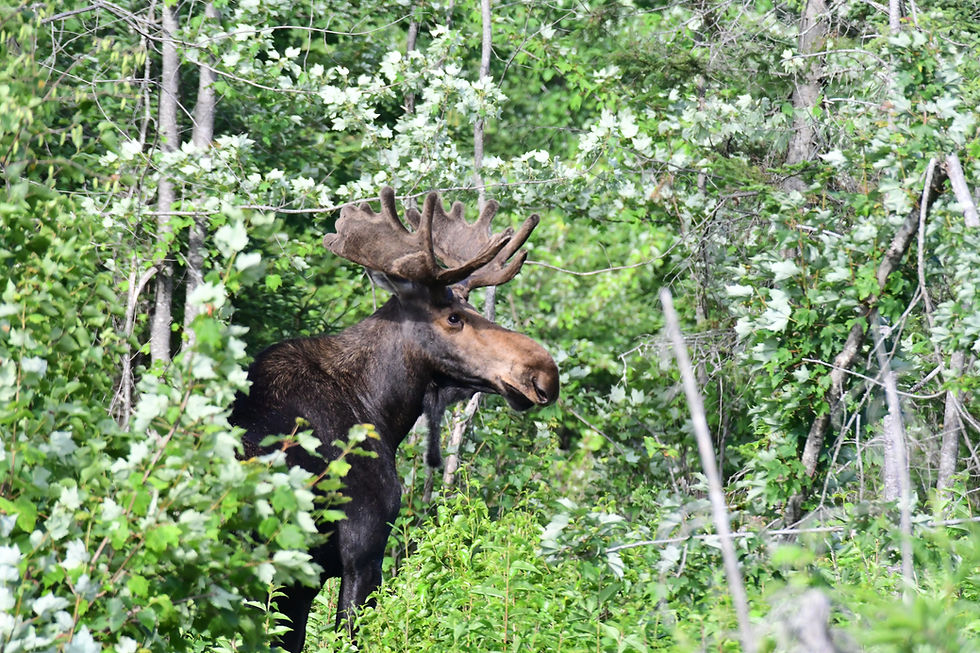
If you're planning a trip to Maine hoping to see a moose...
One of the first questions you're probably asking is: When is the best time to see one?
Here in the Moosehead Lake region, there isn't just one answer.
The time of year matters. The time of day matters. Temperature, weather, available food and even the individual moose matter. What they're doing in June can look very different from what they're doing in August or late September.
And sometimes, finding a moose starts with noticing something very small—a ripple in the water, the flick of an ear between the trees or the sound of an animal feeding before you can actually see it.
That's part of what I love about looking for them.
When Is the Best Time to See Moose in Maine?
For visitors planning a trip specifically to see moose, June through September offers some of the most interesting opportunities in the Moosehead Lake region. Early mornings are generally my favorite time to look, although evenings can also be productive.
But the experience changes as the season moves along. Early summer can bring cows with young calves.
July and August often draw moose toward ponds and wetlands to feed on aquatic vegetation. By late summer, bull antlers have become increasingly impressive. September brings cooler temperatures, fully developed antlers and the beginning of breeding behavior associated with the fall rut.
There is something worth seeing throughout the season—you just have to know what you're hoping to experience.

What Is the Best Time of Day to See Moose Near Greenville, Maine?
If I had to choose one time, I would choose early morning.
Maine mornings come early in the summer. The air is cooler, the roads are quieter and the woods are just beginning to wake up. Moose may be feeding along wetlands, ponds, young forest growth and other areas that provide the food they are looking for.
Those mornings are about more than simply checking “see a moose” off a vacation list.
Sometimes there is fog sitting over the water. You hear the birds before the sun is fully up. You may hear a moose moving or feeding before anyone in the vehicle can find it.
Then somebody spots an ear.
Or a nose.
Or a shape that wasn't there a moment ago.
Evening can also be a productive time to look for moose, particularly as temperatures begin to cool again. Midday sightings certainly happen too—especially when moose are using water during warmer weather—but wildlife doesn't follow our schedules.
That's why I never promise that a particular hour guarantees a moose sighting.
They're wild. That's what makes the encounter real.
Seeing Moose in June: Calves and a Changing Maine Woods
June is when the Moosehead Lake region really begins transitioning into summer.
New growth is appearing, leaves are filling in and cows may have young calves nearby. Seeing a mother with a tiny calf following behind her is an entirely different experience from seeing a mature bull.
Calves are still learning their world, and cows can be especially protective. We give them plenty of room and let them decide what they're comfortable doing.
As the vegetation becomes thicker, spotting moose also starts becoming more challenging. A thousand-pound animal sounds impossible to miss until you've watched one disappear into Maine's woods.

July and August: Moose Feeding in the Water
July and August are two of my favorite months for watching moose around the Moosehead Lake region.
During the warmer part of summer, ponds, bogs and wetlands can become important places for moose. Aquatic plants provide food, and the water can also offer some relief from the summer heat.
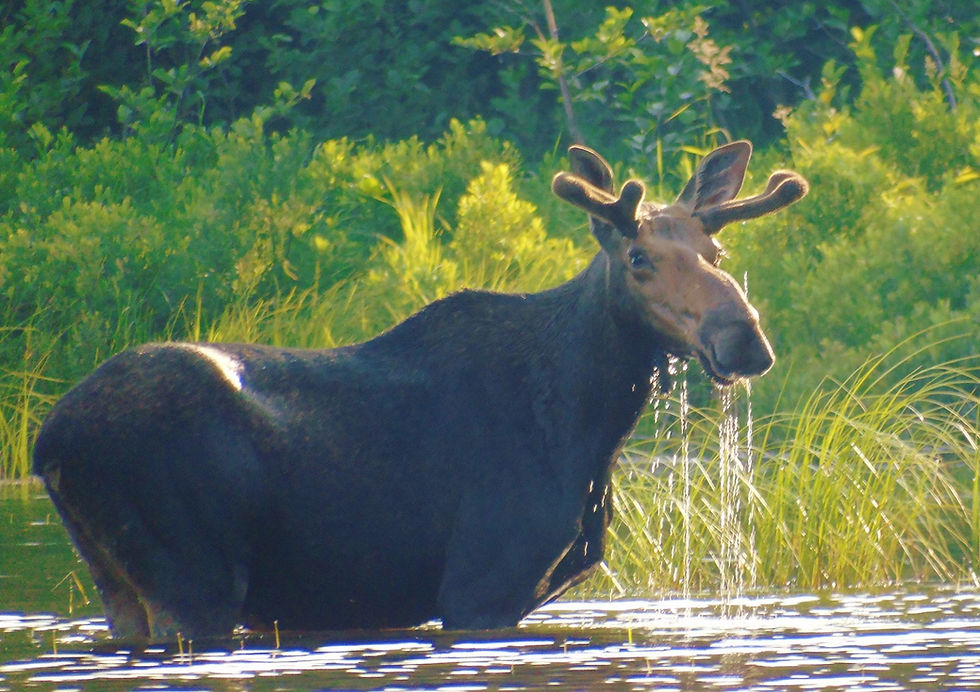
This is when you may get one of those classic Maine experiences—a moose standing in the water, reaching below the surface and coming back up with a mouthful of vegetation.
But even then, you have to know how to look.
A feeding moose may have much of its body below the water. At first, you might only notice ears, a nose or an unusual dark shape among the vegetation.
Sometimes you'll hear the feeding before you see the moose.
That's why I tell people to slow down and look again.
The woods give away little clues when you're willing to notice them.
September: Big Bulls, Antlers and the Beginning of the Rut
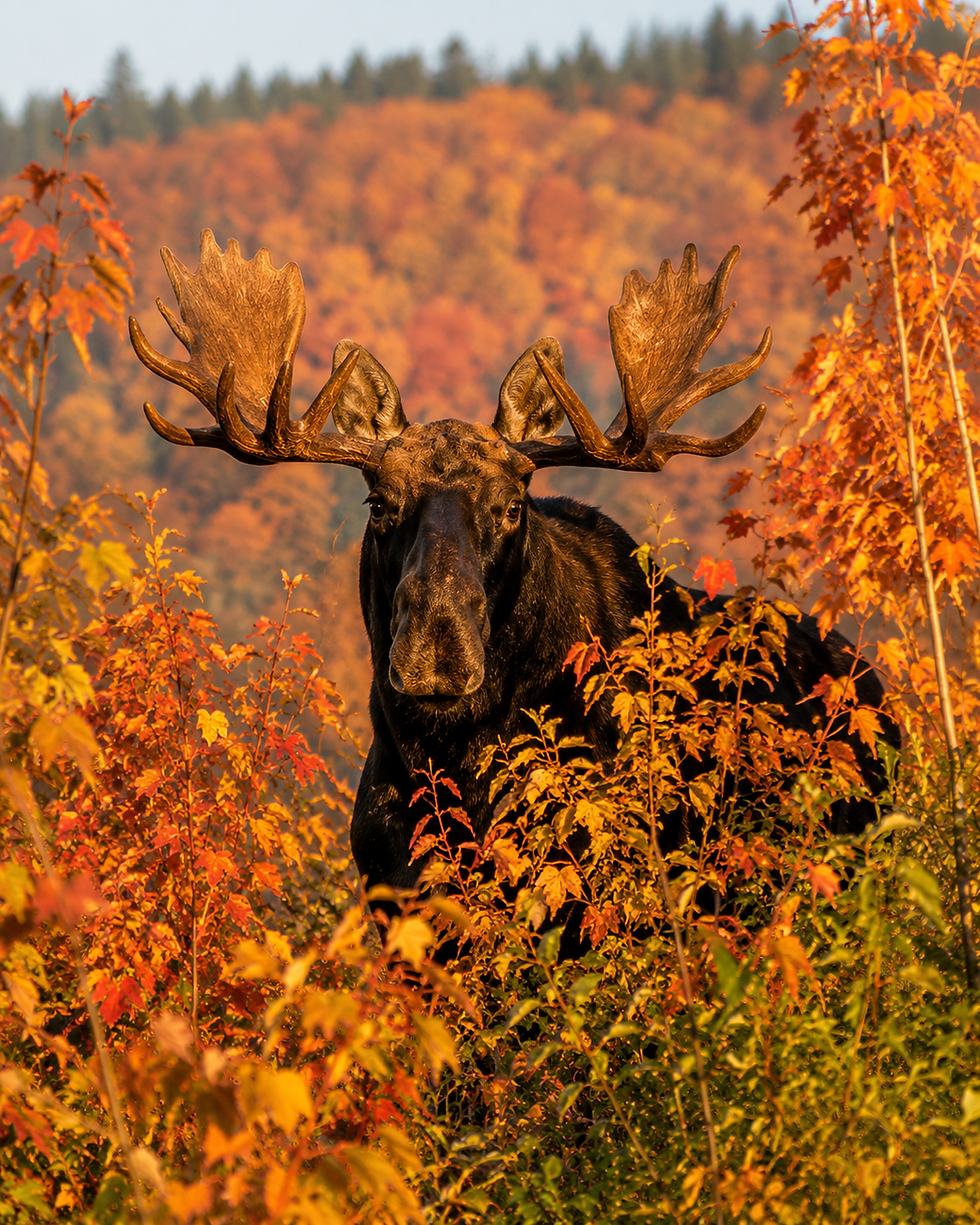
If the picture in your mind is a large Maine bull with a full rack of antlers, September is a wonderful time to visit.
By late summer and early fall, the antlers that have been developing throughout the season have become much more impressive. As September progresses, breeding season begins changing moose behavior as well.
Bulls may become more active as they search for cows, and the cooler weather can change movement patterns. It's an exciting time in the North Woods, but it's also a time when wildlife deserves additional respect and space. A bull during the rut can behave very differently from the quiet animal someone watched feeding in a pond during July.
And then Maine adds another layer—the beginning of fall color. A bull standing against early autumn foliage is one of those sights that's difficult to forget.
Is Morning or Evening Better for Moose Watching?
Both can be productive, but I personally favor mornings.
There is something special about being out before most of the world is awake. The roads are quieter, summer temperatures are cooler and the stillness of the early morning gives us a chance to watch and listen. Sometimes the birds are the only thing you hear until the woods give you another clue.
Evening tours have their own personality. As the heat of the day fades, wildlife can become more active again, and the changing light gives the woods a completely different feel.
Midday shouldn't be completely overlooked either. During the warmer summer months, we sometimes find moose using ponds and wetlands, where they can feed on aquatic vegetation and find some relief from the heat.
I don't think of one time as the “right” experience and another as the “wrong” one.
They're simply different chapters of the same Maine story.
Why Is the Moosehead Lake Region Good for Moose Watching?
The greater Moosehead Lake region has the mixture of habitat moose need—wetlands and bogs, aquatic vegetation, young forest growth and large stretches of undeveloped land.
But good moose habitat doesn't mean a moose will be standing beside the road waiting for you.
Knowing what habitat looks promising is only part of it.
You also learn to watch for tracks, freshly browsed vegetation, movement around wetlands and subtle changes in the landscape. Conditions change throughout the season, and places that were active a week ago may suddenly become quiet.
That's one reason local knowledge and time spent scouting matter.
The more time you spend in these woods, the more you learn that finding moose isn't about knowing one secret spot—it's about learning to read the landscape and noticing when something has changed.
Can I See a Moose Without Taking a Tour?
You do not need a guide to see a moose in Maine, and I would never tell someone otherwise. People see moose while driving, hiking, camping or simply being in the right place at the right time.
The challenge is knowing what to look for.
Moose can blend remarkably well into the Maine woods. Sometimes people drive right past one because they're looking for the outline of an entire animal instead of an ear, a leg, a dark shape or movement in the brush.
A guided experience adds local knowledge, wildlife education and another set of experienced eyes. It also gives you the opportunity to slow down, learn what we're looking for and understand more about the habitat and behavior of the animal we're hoping to find.
But the moose still makes the final decision about whether we're going to see it.
And I wouldn't want it any other way.
Private Moose Tours from Greenville, Maine
For visitors who would rather experience the search with someone who spends time in these woods, we offer private moose tours beginning in Greenville, Maine and exploring the greater Moosehead Lake region.
Our tours are vehicle-based and generally last 4–5 hours. Because each tour is private to your party, we aren't following a rigid route or rushing from one scheduled stop to another. We can adjust to the conditions, follow the signs we're seeing and take the time to watch when we're fortunate enough to find a moose.
For me, the experience isn't only about finding the animal. I want you to understand a little more about what we're looking at—the habitat, the signs, the behavior and those small clues in the Maine woods that are so easy to pass by.
The moose are always wild, and sightings can never be guaranteed. We respect their space, let them behave naturally and leave them where we find them.
Planning a moose experience during your Maine vacation? Explore our Private Maine Moose Tours for tour options, pricing and availability.
Frequently Asked Questions About Seeing Moose in Maine
What is the best month to see moose in Maine?
There isn't one perfect month for every kind of moose sighting. June through September can all offer good opportunities in the Moosehead Lake region. July and August are especially interesting for watching moose feed around ponds and wetlands, while September is popular for mature bulls with developed antlers and the beginning of the fall rut.
What is the best time of day to see moose near Greenville, Maine?
Early morning is my first choice, especially during the warmer summer months. Evening can also be productive as temperatures begin to cool. Moose can be seen during the day as well, particularly around water in summer, so there is never one time that guarantees a sighting.
Where are the best places to look for moose around Moosehead Lake?
Moose can be found throughout the greater Moosehead Lake region wherever suitable food, water and cover come together. Wetlands, bogs, ponds, young forest growth and areas with aquatic vegetation can all provide good habitat. There isn't one permanent “moose spot”—their movements change with the season, weather and available food.
Can I see a moose without taking a guided tour?
Absolutely. You don't need a guide to see a moose in Maine. A guided tour adds local knowledge, scouting experience, wildlife education and experienced eyes that know what signs and habitat to look for, but the moose are always wild.
Are moose sightings guaranteed on a tour?
No. Moose are wild animals, and sightings can never be guaranteed. We search areas where experience, current conditions and signs suggest moose may be active, while always respecting the animals and allowing them to behave naturally.
How long are private moose tours from Greenville, Maine?
Our private moose tours generally last 4–5 hours. Tours begin in Greenville and explore the greater Moosehead Lake region by vehicle. You can learn more about pricing, tour options and availability on our Private Maine Moose Tours page.
A Maine MooseGurl Tip
If you think there isn't a moose there, look again.
Don't always look for the whole animal.
Look for the ear that moves independently of the branches. Look for a horizontal line where everything else in the woods is vertical. Watch the water for a ripple that doesn't seem to belong.
And listen.
Sometimes the woods will tell you a moose is there before your eyes ever find it.
Those are some of my favorite moments—the ones when everyone gets quiet and starts looking at the Maine woods a little differently.
Because seeing a moose is wonderful.
Learning how to see the woods around it is something you can take home with you.
And remember—if someone in the vehicle says, “I think I saw something…”
You probably ought to look.


Comments